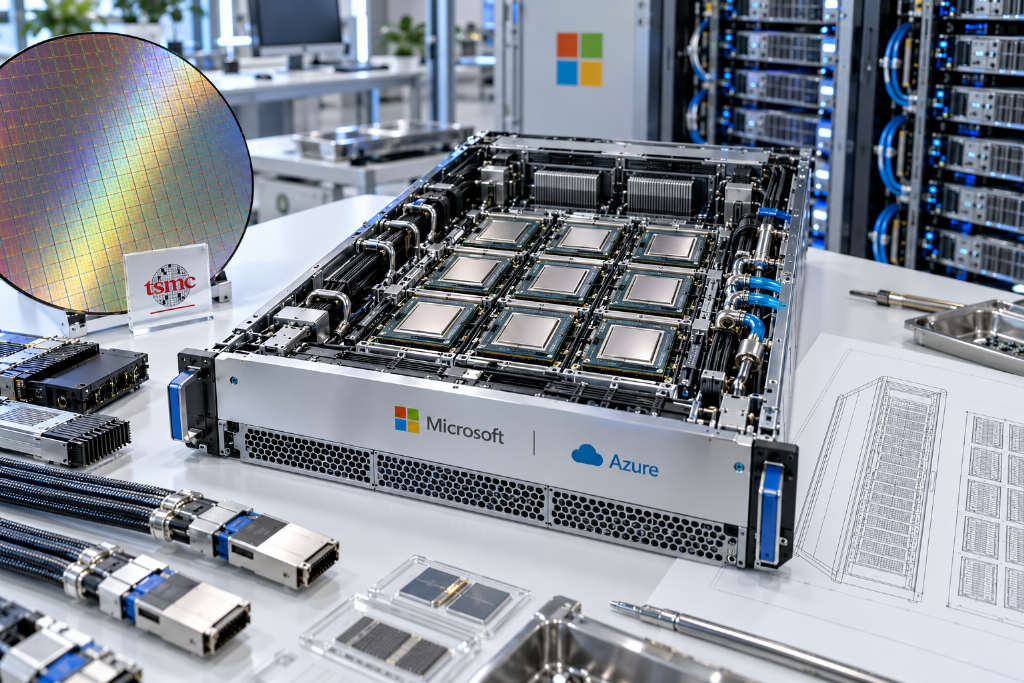
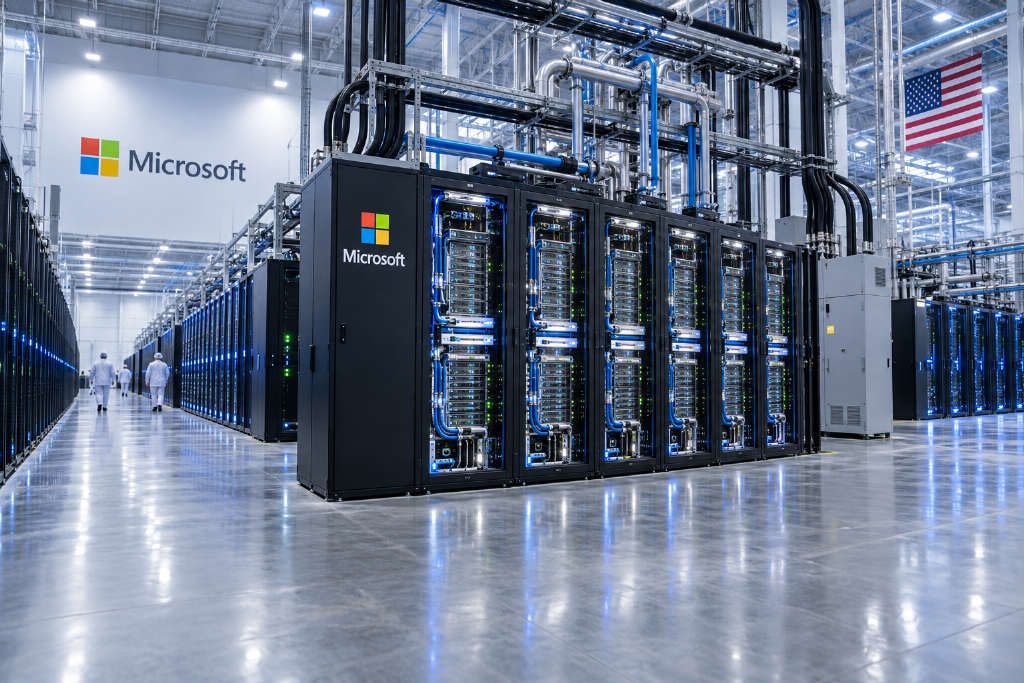
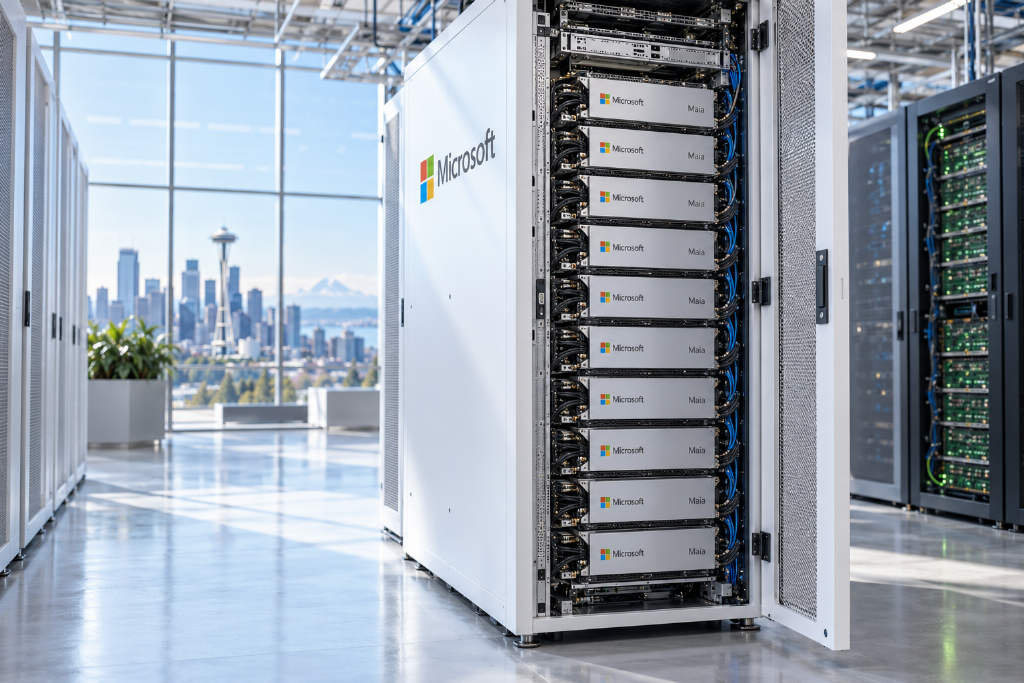
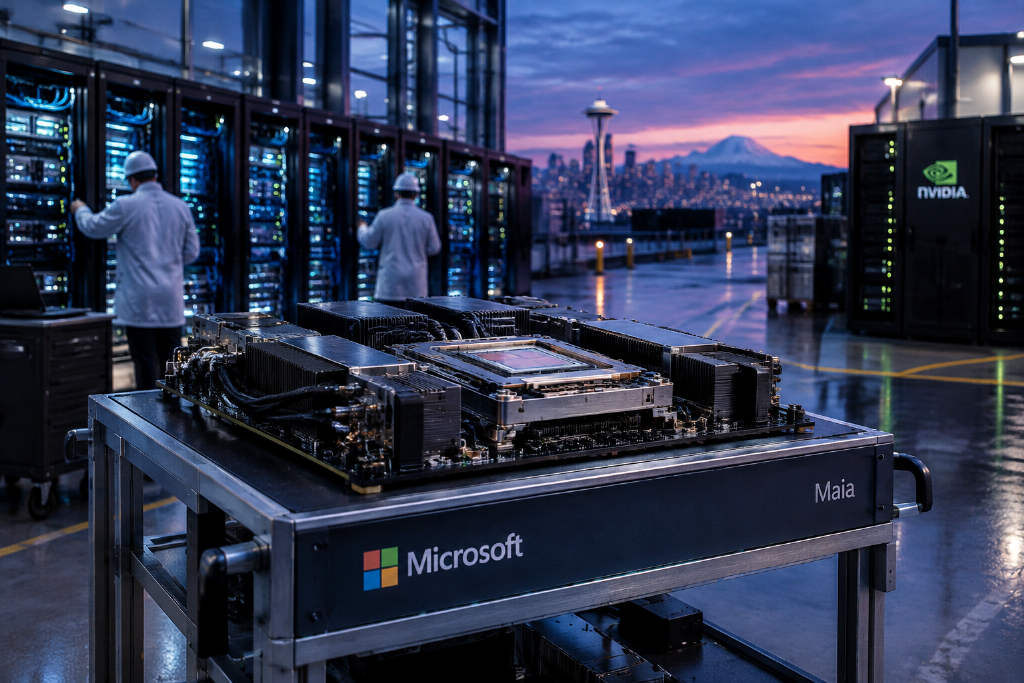
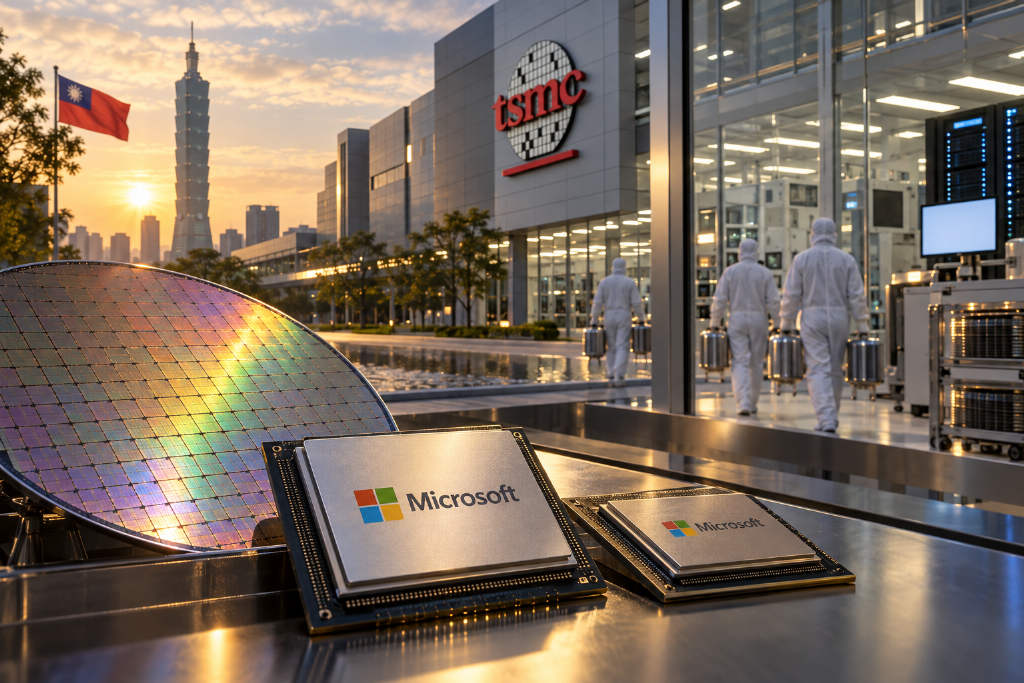
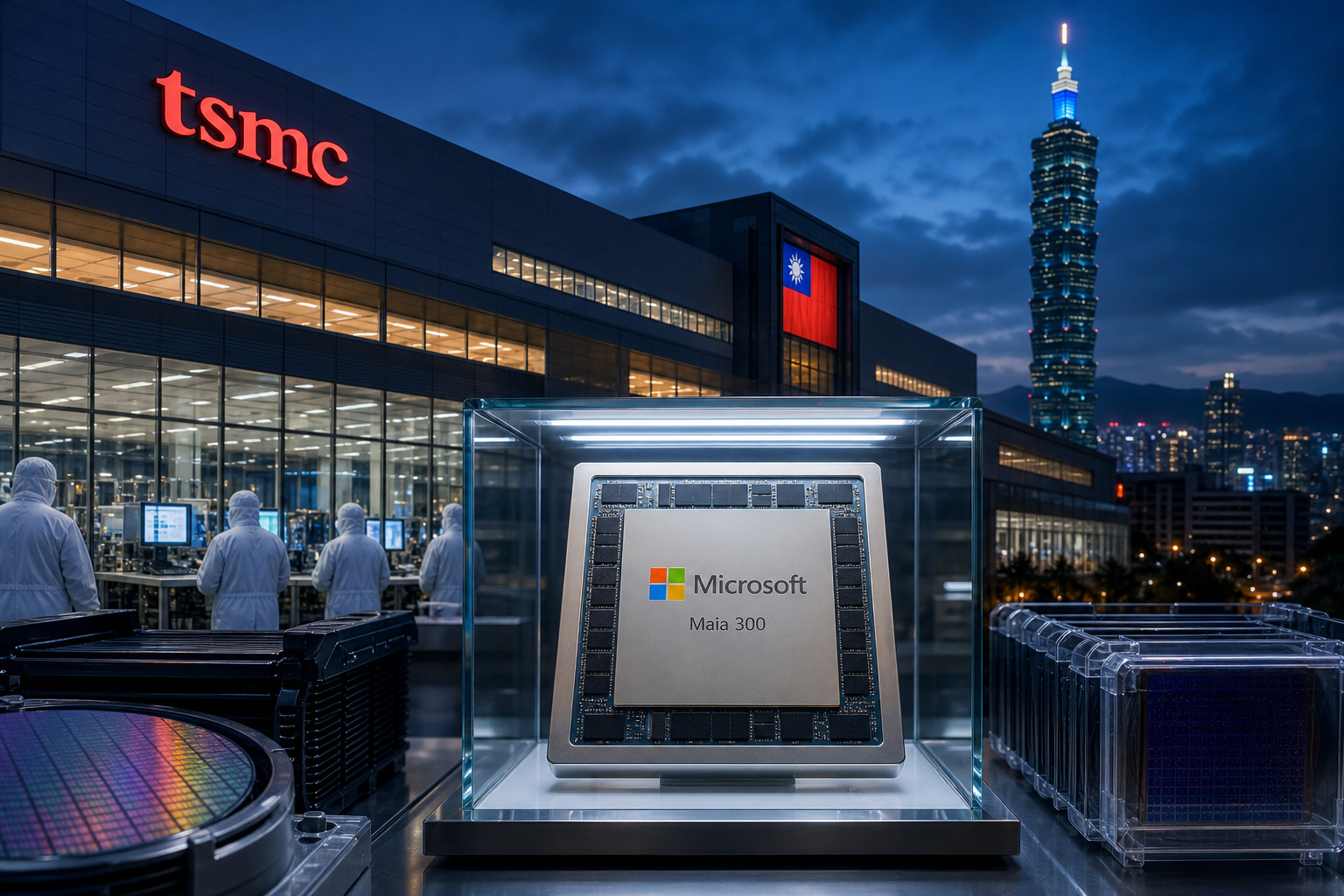
Microsoft2026-10-13 00:36:08Microsoft unveils Maia 300 AI chip, with deployment next year possibly topping 1 million unitsMicrosoft has introduced its third-generation in-house AI chip, Maia 300, and plans to deploy it at scale starting next year, with total deployment potentially exceeding 1 million units, according to a Reuters report cited by Taiwan's Central News Agency. The chip is designed to support Microsoft's internal AI services. The report said Maia 300 uses a chiplet-based design rather than the large single-compute-die approach used in Nvidia's AI accelerators. The chiplets handling key compute functions are built on TSMC's 2 nm process, while other chiplets use a lower-cost 3 nm process for moving data out of the processor and across other parts of the system. Microsoft said Maia 300 can handle code generation and carry out complex business tasks on behalf of users. The previous generation has already been used to run Microsoft's internal AI models as well as OpenAI models delivered through Microsoft Azure. Maia 300 will be installed in racks holding 96 chips each, with power consumption of about 167 kW per rack. By comparison, Nvidia's latest GB300 AI server rack uses 72 GPUs and consumes about 142 kW. Microsoft also said deployment will reach several gigawatts, and it had previously projected capital spending of more than $175 billion this year.30
Microsoft2026-10-12 14:54:43Microsoft unveils Maia 300, says in-house chip will become its main AI inference system from 2027Microsoft on Oct. 12 introduced Maia 300, its third-generation in-house AI chip, and said the Maia line will scale to multi-gigawatt deployments starting in 2027 to serve as the primary inference system behind the company’s products and services. In a blog post, Microsoft Cloud and AI Executive Vice President Scott Guthrie said Maia 300 will enter volume deployment in 2027, marking a gradual shift in user-facing AI compute from Nvidia GPUs toward Microsoft’s own silicon for inference workloads. Microsoft said Maia 300 is expected to deliver 40% more tokens per megawatt than leading GPU systems, while a fully configured rack with 96 accelerators can reach up to seven times the token throughput of the previous Maia 200 generation. The chip carries eight HBM4 memory stacks, 18 TB/s of peak bandwidth, and a 950-watt power ceiling. Microsoft said training workloads will still rely on Nvidia and AMD, according to comments from General Manager Alistair Speirs to CNBC.00
Microsoft2026-10-12 13:53:02Microsoft shares hit a one-year high as the company lays out plans for broader use of in-house AI chipsMicrosoft shares touched their highest level in nearly a year on Oct. 12, rising 0.8% intraday, according to market data from BIT (Bit.com). The move came as the company said it plans to gradually raise the share of internally developed AI chips used in its data centers, a step aimed at reducing reliance on Nvidia GPUs. Microsoft said future AI model requests will mainly be handled through its in-house Maia chip architecture, with the company planning to deploy gigawatt-scale computing capacity across the Maia series. On Monday, Microsoft unveiled its third-generation AI accelerator, Maia 300, which is expected to enter production in 2027. The company said each data center rack will be able to carry 96 Maia 300 chips, double the count supported by the previous-generation Maia 200. Compared with GPUs, Microsoft said the new chip can deliver up to 7x the AI token throughput per rack and improve token processing per megawatt by about 40%. Microsoft added that Maia 300 is expected to improve AI service performance while lowering data center operating costs. Evercore ISI analysts estimate that by the first quarter of 2027, Maia chips will account for about 10% of Microsoft’s AI chip spending.00
Microsoft2026-10-12 13:03:12Microsoft to expand use of in-house AI chips, with Maia 300 slated for 2027 productionMicrosoft plans to steadily raise the share of internally developed AI chips used in its data centers as it looks to reduce reliance on Nvidia GPUs. The company said future AI model request processing will mainly run on its Maia chip architecture, and it aims to deploy gigawatts of computing capacity across the Maia family. On Monday, Microsoft unveiled its third-generation AI accelerator, Maia 300, which is expected to enter production in 2027. Each data center rack can hold 96 Maia 300 chips, double the count of the previous Maia 200 generation. Microsoft said the chip can deliver up to 7 times the AI token throughput per rack compared with GPUs, while tokens processed per megawatt improve by about 40%. The company added that Maia 300 is expected to improve AI service performance and lower data center operating costs. Evercore ISI analysts estimate that Maia chips will account for about 10% of Microsoft’s AI chip spending by the first quarter of 2027. Even so, Nvidia will remain a key supplier for Microsoft’s AI infrastructure, and the company said model training will still rely on Nvidia and AMD chips. Unlike Google’s TPU and Amazon’s Trainium, Microsoft’s in-house accelerator is not yet available for rental by other enterprises.00
Microsoft2026-10-12 13:09:19Microsoft unveils Maia 300 AI chip in bid to cut reliance on NVIDIAMicrosoft has introduced the Maia 300 AI chip, according to a Techub News brief citing Crypto Briefing. The reported aim is to reduce the company’s dependence on NVIDIA, whose chips have held a dominant position in the AI hardware market. The brief also said Maia 300 could challenge NVIDIA’s lead and shift competitive dynamics across the sector. While the source did not provide technical specifications, launch timing beyond the report date, or commercial rollout details, the move was framed as part of Microsoft’s effort to build more of its own AI hardware capability. The development points to rising competition in AI infrastructure, with Microsoft positioning Maia 300 as a potential alternative to existing NVIDIA-based deployments.00
Microsoft2026-10-12 13:10:49Microsoft to scale Azure Maia AI chip system to gigawatt-level deployment from 2027Microsoft said it will expand deployment of its Azure Maia AI chip system to the gigawatt level starting in 2027, positioning Maia as the primary inference system for the company’s products and services. The company said Azure Maia 200 is already in production and is supporting products including Microsoft Copilot, while also helping the MAI team develop its next-generation models. Microsoft also outlined its next chip, Maia 300, which is scheduled for release in 2027. The system is being designed for newer AI workloads, including long-context reasoning, low-latency conversational use cases, and multi-step agentic tasks. According to Microsoft, Maia 300 is expected to process 40% more tokens per megawatt than leading GPU-based systems. In a full 96-accelerator configuration, Microsoft said rack-level token throughput could reach as much as seven times that of Maia 200. The details were disclosed in a Microsoft Blog post.00
Microsoft2026-09-22 03:32:20Microsoft pushes in-house AI chips as Maia 300 is said to seek more than 300,000 units of TSMC capacityMicrosoft is accelerating its in-house artificial intelligence chip program as it looks to cut reliance on expensive third-party processors and ease cloud computing costs. Market information cited in the report says the company is preparing its second-generation Maia 300 chip and has approached Taiwan Semiconductor Manufacturing Co. (TSMC) for manufacturing capacity exceeding 300,000 units, with delivery planned by 2027. Benjamin Bien, general manager of Microsoft Taiwan, said Microsoft’s internally developed application-specific integrated circuits, or ASICs, are progressing smoothly across design, capacity and deployment, and are expected to enter mass production next year. In the near term, the new chips are set to support Microsoft’s own services, including Microsoft 365 and Copilot, rather than being opened to third-party rental customers. The report also says Microsoft sees custom silicon as a way to lower AI computing costs, with internal briefing materials indicating dedicated chips could reduce related costs by about 30% to 40%. Even so, the company still faces scrutiny over ecosystem development and production scale, especially compared with Google, which is expected to produce as many as 300 million TPU units next year and already offers external compute rental.510
Microsoft2026-08-10 13:38:55Microsoft to Launch Maia 300 AI Chip This Fall, Secures TSMC Manufacturing CapacityMicrosoft plans to publicly launch its next-generation Maia 300 AI chip this fall, possibly as early as September, according to ChainCatcher. To meet delivery demand in 2027, the company has approached TSMC to secure manufacturing capacity for more than 300,000 units of the chip. The news was first reported by ChainCatcher.1780